

Why Water Alone Isn’t Always Enough: Understanding Electrolytes and Horse Welfare
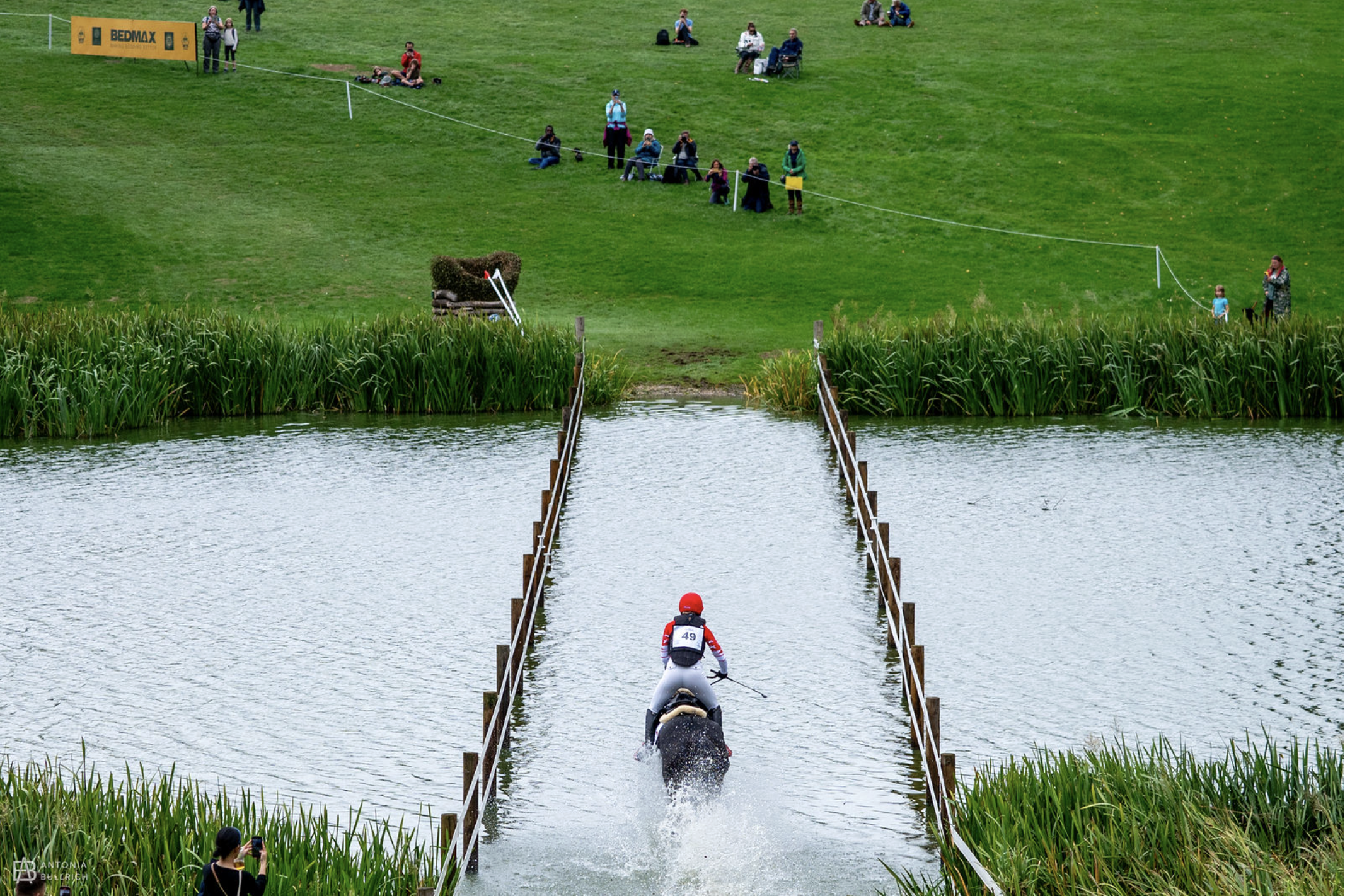
I always thought that giving your horse water after exercise would be enough to replace what they had lost through sweating.
After spending years around horses through polo, eventing and training, I genuinely believed water was all they needed.
But during my degree in Equine Science, I learned that hydration is a little more complicated than that.
When horses sweat, they don't just lose water — they also lose important electrolytes, including sodium, potassium and chloride, which are essential for normal hydration, muscle function and recovery.
That really changed the way I looked at horse care.
Because whether it's a polo match, a day’s hunting, an event, a training session or even travelling in the horsebox, horses are constantly adapting to the demands we place on them.
Supporting them after those demands is just as important as preparing them before.
That's why we developed Aminoperformance Electrolytes.
Understanding what horses lose through sweat
Sweating is one of the most important ways horses regulate their body temperature.
During exercise, particularly in warm conditions or during prolonged periods of work, horses can produce significant amounts of sweat. However, sweat is not simply water.
Equine sweat contains electrolytes — minerals that play important roles throughout the body.
Sodium, potassium and chloride are particularly important because they help maintain fluid balance and support normal muscle and nerve function.
This means that after a horse has been working hard, replacing fluid losses is only part of the recovery process. Supporting electrolyte balance is another important consideration.
Why electrolytes matter for working horses
Every horse is different, and the amount of sweat and electrolyte loss will depend on factors such as workload, fitness level, environment, temperature and duration of exercise.
A horse travelling long distances, competing, training regularly or working in hot conditions may experience greater demands on their hydration system.
This is something I have experienced first-hand.
Through polo, eventing and working with horses, I have seen the variety of situations we ask horses to cope with.
A horse can go from standing in the stable, to travelling in a horsebox, to performing physically demanding work within a short period of time.
The work itself is only one part of responsible horse management.
The preparation, recovery and attention to detail afterwards are just as important.
The role of electrolytes in recovery
Electrolytes are involved in many processes within the horse’s body.
Sodium helps maintain normal fluid balance, potassium contributes to normal muscle function, and chloride plays a role in maintaining fluid and acid-base balance.
Magnesium is also an important mineral involved in normal muscle function and energy metabolism.
This is why Aminoperformance Electrolytes were formulated with a combination of:
Sodium chloride
Potassium chloride
Magnesium carbonate
Dicalcium phosphate
Dextrose
Each ingredient has been carefully selected to help provide a balanced source of minerals to support horses during periods where electrolyte replacement may be required.
Dextrose is included as a source of glucose, which can help make electrolyte solutions more palatable and provides a source of readily available energy.
Why we created Aminoperformance Electrolytes
At Aminoperformance, our approach has always been built around understanding horses first.
Our products are not created simply because a horse competes.
They are created because horses have different nutritional demands depending on their lifestyle, workload and environment.
Whether it is a competition horse, a hunting horse, a polo pony, a young horse in training or a horse travelling regularly, supporting their recovery is an important part of good management.
For me, learning about electrolyte balance during my Equine Science degree changed the way I viewed hydration.
It showed me that caring for horses is about continually learning, questioning what we think we know and using science to improve the way we manage them.
Lindinger, M. I. (2022). Oral Electrolyte and Water Supplementation in Horses. Veterinary Sciences, 9(11), 626.
https://www.mdpi.com/2306-7381/9/11/626
Equine Exercise Physiology and Electrolyte Requirements.
Available from:
https://books.google.co.uk/books?hl=en&lr=&id=it-m5VlwKRgC&oi=fnd&pg=PA328
McCutcheon, L. J. & Geor, R. J. (2012). Exercise Physiology of Horses: Thermoregulation, Sweating and Fluid Balance. Experimental Physiology.
https://physoc.onlinelibrary.wiley.com/doi/full/10.1113/expphysiol.2012.065185
Challenges of Endurance Exercise: Hydration and Electrolyte Depletion.
https://www.distanceriding.org/wp-content/uploads/2017/09/Challenges-of-Endurance-Exercise-Hydration-and-Electrolyte-Depletion.pdf
